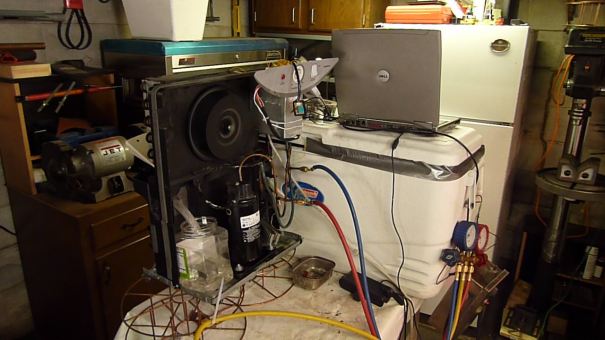
Trying Not to Blow Myself Up

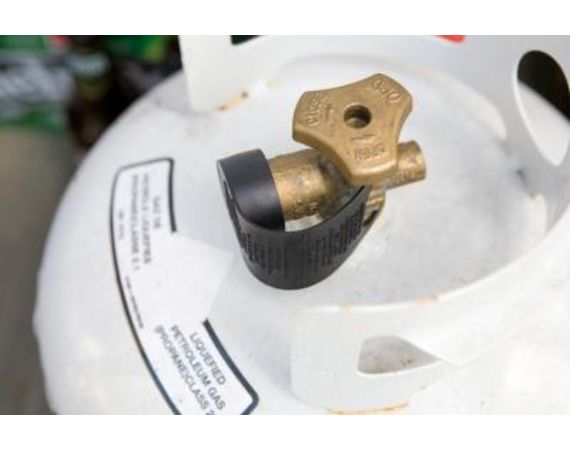
I advocate hydrocarbon refrigerants for vapor compression systems whether it’s refrigerators, dehumidifiers, split systems, whatever.  There are a lot of advantages to them over proprietary cocktails like R-134a, R-22, 410a and so on.  First of all, they are naturally found on this planet with the help of a little refinement.  Propane, Butane, Isobutane, Propylene are simple hydrocarbon chains with pretty good thermal properties.  These natural refrigerants don’t contain any nasty fluorine, break down quickly in the atmosphere and are non toxic, more or less.  Enough of them in a confined space will asphyxiate a person, but that is true of any gas that isn’t oxygen I think.  Oh yeah, only problem is mix hydrocarbon refrigerants with the right amount of oxygen and you got yourself a freaking bomb.

No doubt people have been killed or severely hurt by these gases under certain circumstances.  Fortunately, at least with propane (I’m not sure about the rest), there is a very specific ratio of HC gas to oxygen to get an explosive mixture.  These conditions don’t normally exist within a vapor compression system.  I sure hope not!  So long a vapor compression system remains leak free, I see no danger in using these volatile gases for refrigerants.  Even if there were some sort of catastrophic failure inside the system that caused a spark, there would be no ignition.  If there were a small leak in a system, it is unlikely enough propane would leak in quantities sufficient to get an explosive mixture.  My only concerns with using propane as a refrigerant or any hydrocarbon would be in a case where large amounts of it escaped from a system in a short time.  These HC refrigerants are being used extensively in Europe and in the SE Asia/Pacific region I think, for refrigerators, air conditioners, dehumidifiers, commercial refrigerators and freezers in grocery stores and so on.  To my knowledge, there haven’t been problems warranting the return to proprietary refrigerants.  These machines of course, have been thoroughly tested and “put through their paces”.  The manufacturing processes, servicing, repair, disposal and the like have been thought out and made to be safe.  So, I should think people would feel as safe about having a pound of flammable refrigerant in the various appliances in their homes, as they feel about having flammable natural gas piped in or 240 VAC coursing through the walls.  These potentials have been “tamed” so to speak such that they are made safe with the knowledge and respect of their potential dangers.

On the other hand is the experimental hobbyist.  I’ve used BBQ grade (consumer grade) propane in modified/homemade refrigeration systems.  Quite successfully I might add.  I immediately saw it’s advantage, or at least a cleaner, more refined version called R-290, and I felt that HC refrigerants were the way to go.  Obviously, I’m not ignorant of the potential dangers of handling a flammable vapor/liquid, but when I read hostile opinions from industry technicians (mostly Americans I think) about HC refrigerants; I usually chock it up to fear of change and protecting the status quo and the domination of refrigerant manufacture by companies like Dupont or Dow Chemical.  Handling any compressed gas is dangerous and requires some respect and common sense.

As a refrigeration hobbyist, there are always unforeseen outcomes when testing an idea out.  Even though I advocate HC refrigerants, I have to say remaining humble about my brazing abilities and knowledge of material science, I’m still a little nervous about a possible catastrophic leak in a machine I build.  It was recently brought to my attention by another hobbyist how dangerous and unethical it is to run untested refrigeration equipment with flammable gases under the same roof of unsuspecting neighbors.  He is absolutely correct, it is.  It is one thing if you live alone or have a safe place to test such things, but for me, I’ll stick to the proprietary refrigerants for now.

R-134a is toxic, proprietary, more expensive than propane, but it won’t explode when mixed with oxygen.  An awful lot of the stuff would have to be vented to cause anyone harm.  Another advantage of R-134a is that there is a ton of literature on the stuff with all of the thermophysical properties well documented.  BBQ propane on the other hand, is a different blend of gases in each and every bottle.  R-290 would be well documented, but is probably as expensive if not more than R-134a and I bet quite hard to get here in the states.  R-134a can be reused and recycled and it’s global warming potential is  non-issue if handled responsibly and recovered correctly (not considering it’s original manufacture which is probably quite damaging to the atmosphere).

I think I will get a hold of a bottle of R-134a or other nonflammable refrigerant for the purposes of experimentation and testing.  In the future, I build something in a more standardized fashion and can prove the relative safety of HC refrigerants in it, then I will take the steps to implement them.

M.C. Pletcher

Tagged with: , , , , ,
Posted in Refrigeration

Future Plans

I’ve been thinking quite a lot about refrigerator designs and what steps I’m going to take in developing them.  I tend to take on a lot more than I can chew and then when it all becomes too overwhelming, I get frustrated and give up or get distracted by something else.  In this case, I think I’ll use that to my advantage.  There are so many projects I would like to explore related to vapor compression systems, thermal energy storage, refrigerator cabinet design and so on, that rather than design the hell out of something, going through thousands of iterations until it’s a rich and thoughtful idea, only to be without the skill set to bring it to fruition; I will jump head first into a hands on build I know I can accomplish while developing skills I need to proceed further along the way.  As I reach the limits of effective manual data logging, I will have the motivation to design and build and accurate, repeatable data acquisition system.  If I become frustrated by the limits of hermetic compressor, I’ll investigate purchasing an open drive system.  Maybe I’ll become fascinated by using a low temperature brine with PCM balls to maintain a refrigerated cabinet at desired temperatures.  I’m not limiting myself to a specific project.  We’ll see where it goes.

Once I find steady work I’m going to build a very crude test platform that pumps heat from a vessel of water and discharges it into the air.  This project will help redevelop my brazing skills.  I have enough parts lying around for most of it.  Some copper coils for a water heat exchanger, radiative coils, fans, compressor and some Coleman coolers for a water vessel.  I’ll have to rig everything up on an insulated board that can sit on top top the water vessel with evaporator coil suspended below.  Some sort of fan and shroud will have to be fashioned for the condenser.  A small brass flow control valve can be used for the refrigerant control.  BBQ grade propane will be suitable as the refrigerant.  Simple schrader access ports will be used at first, but I’d like to quickly acquire some king valves since these machine will be altered constantly.  In that regard, it would be wise to construct a liquid receiver that the refrigerant can be pumped into during modifications rather than venting it.  I may have to rig up some sort of recovery machine sometime.

The point is, I want to keep this fun.  I’m not doing any of this for money, so if it’s not fun why do it?

Tagged with: , , ,
Posted in Philosophy, Refrigeration, Refrigerator

Refrigerator Cabinet Design – Part 2

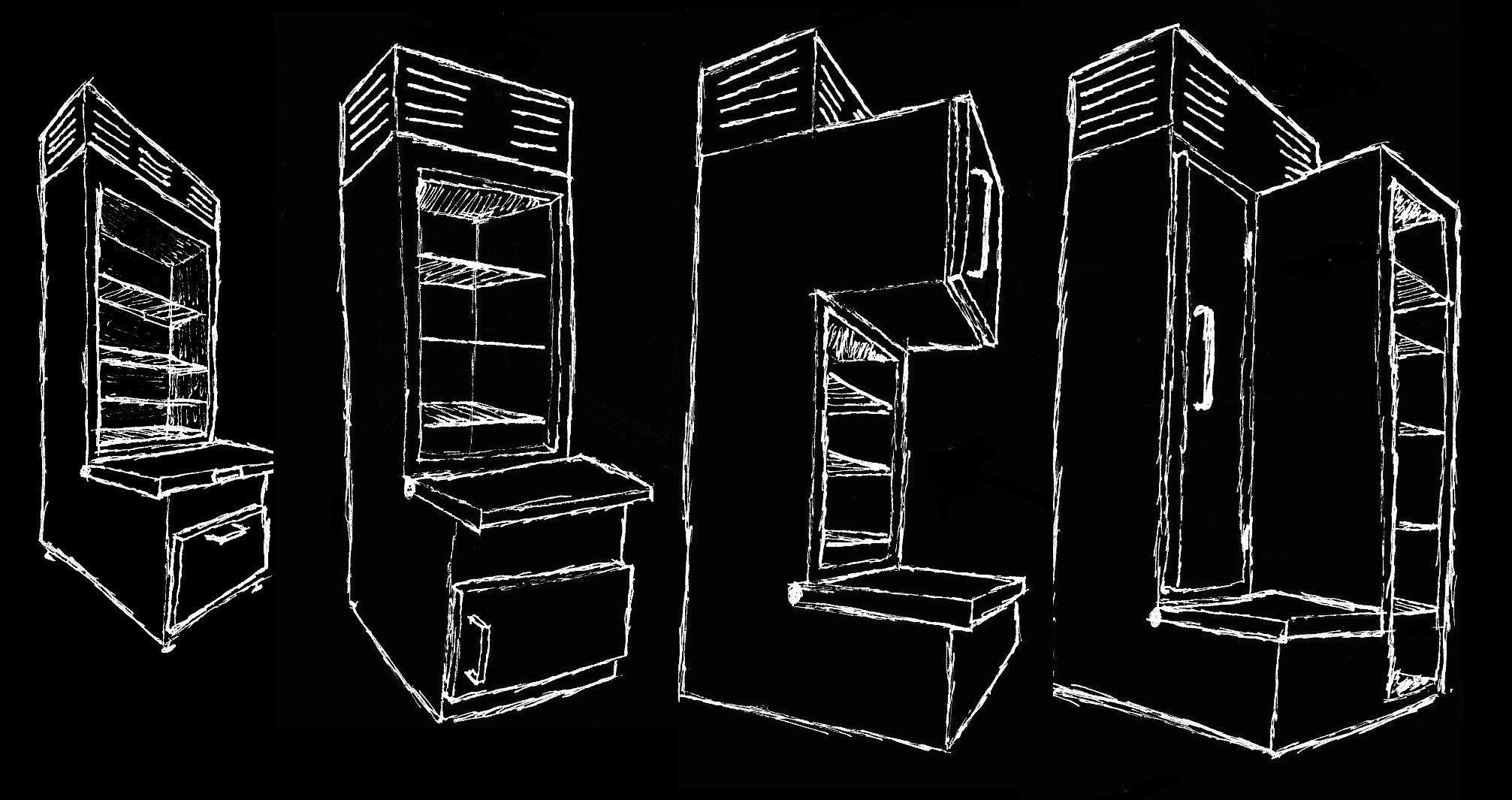
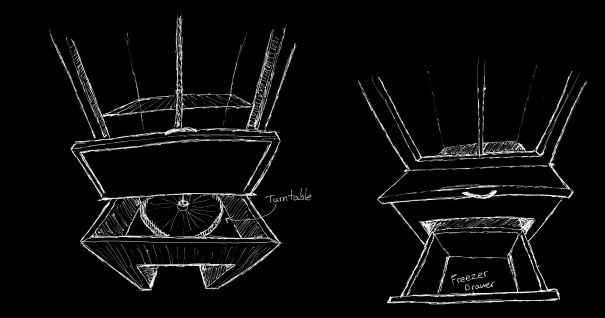
In Part 1 I complained a good bit about the design of conventional refrigerators.  Since I was a little kid, I thought that surely their must be a better way make a refrigerator more convenient and at the same time consume less electricity.  I’ve established that I would like to do away with the swinging door if possible using sliding doors wherever I can.  A quick access door would be good too that allows a person to retrieve some common items without dumping all the cold air in the refrigerated cabinet each time the door is opened.  My preferred embodiment of this would have either a flip up lid or sliding lid granting access to a rather shallow space the full length and width available.  The space may or may not contain a turn table that would make better use of the depth of this volume.  In most versions, this quick access area shares common air with several shelves above which are usually the width available and about half the from to back depth.  The shelves are accessed from a vertical sliding window/door above the flip up lid.  The question right now becomes: “What of the freezer?”.
4-Sliding-Doors

In the above four drawings, the two to the left are basically the same with the freezer at the bottom, accessed by a hinged door.  The only discernible difference is one swings like a conventional freezer door and the other like an oven.  I figure considering how low it is, the oven style is probably better.  The third drawing is very strange.  The only difference between it and the unit to the left is that now the freezer is on top the refrigerated space much like a conventional refrigerator.  In my opinion, this design is less practical than the “hutch” because it forces the user to bend over for most items and it also limits the view.  The reason I drew this and the odd looking vertical embodiment next to it which I won’t discuss much, is because of the difficulty in making these designs functional. Read more ›

Tagged with: , , , , , , , ,
Posted in Refrigeration, Refrigerator

Refrigerator Cabinet Design – Part 1

I have some issues with the current state of domestic refrigerators.  Anyone who has read my other posts is probably well aware of this fact.   A Better RefrigeratorThe Killcap Refrigerator and Hand Crafted Refrigerators.  I have a great deal of interest in the vapor compression system in these domestic machines and how I might redesign them to use less energy, but also different forms of energy.    As much interest is focused on the design of the refrigerator cabinet itself.  It is much easier to redesign the cooling system of a refrigerator if the entire volume of air within the cabinet is not changed every time someone wants to grab an item out of it.  Instead, I think there might be ways to improve the configuration of the common household refrigerator to maintain a more constant temperature while requiring less power to do so and also make it a more practical fixture in our homes by fashioning it in such a way as to make it easier to find and retrieve items therein.

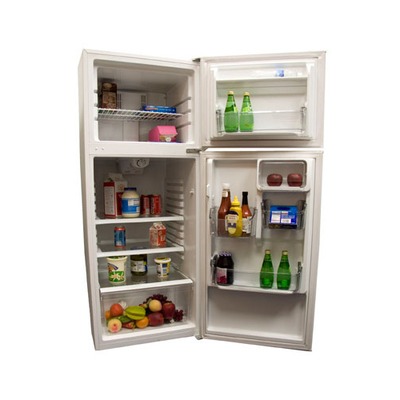
First, a quite common swinging door, refrigerator/freezer combination for example:

Aficionado-10.28-Cubic-Ft.-Top-Freezer-Refrigerator

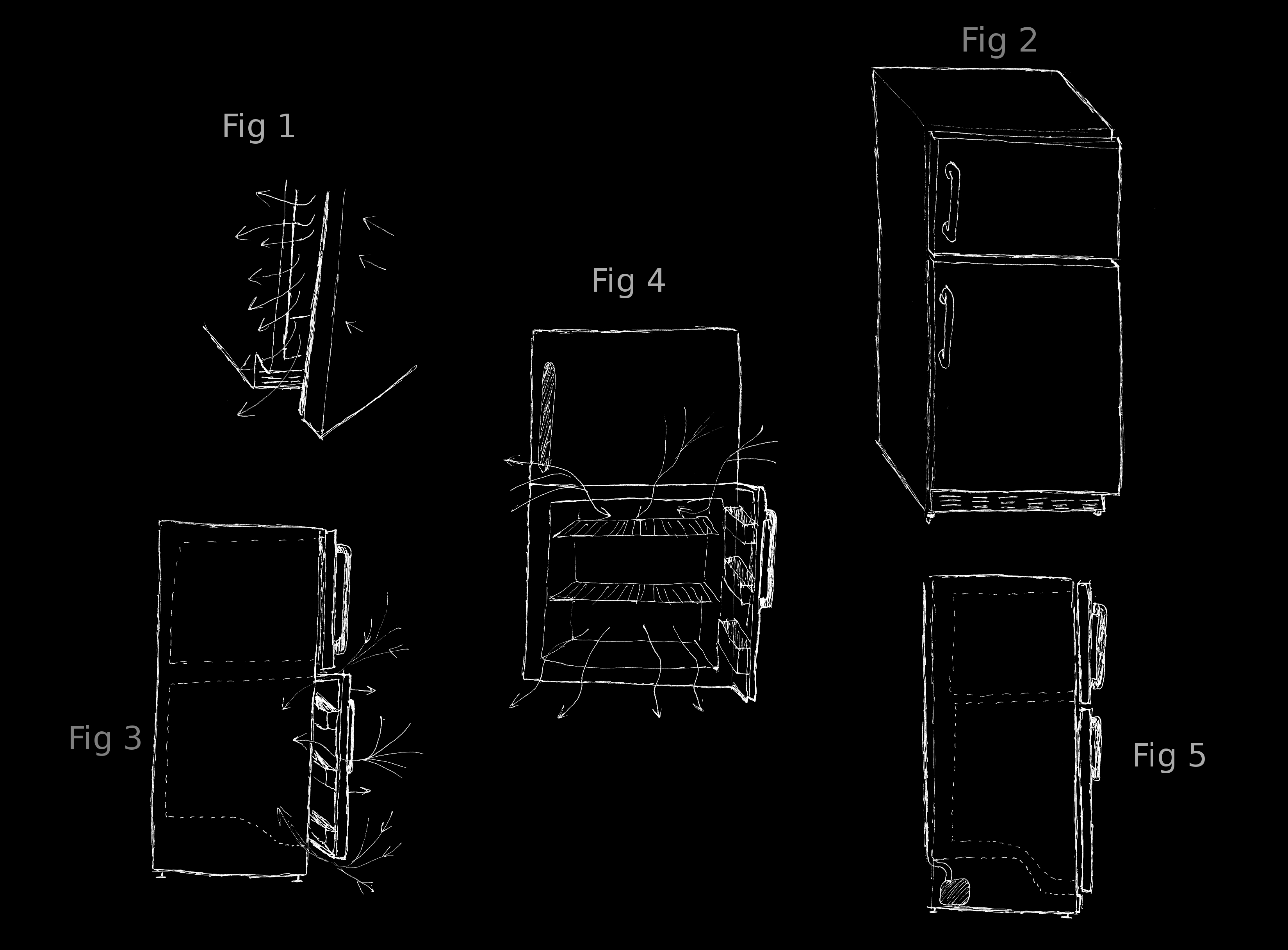
I certainly don’t need to familiarize the reader with the construction of this type of refrigerator; it is surely the most common type.  There really is nothing too special about it.  Because it is so common and most configurations that appear quite different, but share the same problems, I will use this example to explain the problems I wish to address.

Conventional Rerigerator

The above drawings are in no particular order.  I apologize for my poor illustrating ability so please, bear with me.   Read more ›

Tagged with: , , , , , , ,
Posted in Refrigeration, Refrigerator

“Free” as in “Freedom”

richard_stallman_cover-227x300A part of technological design I think is important, is the distribution model chosen.  In a dominantly capitalist economic system, marketability seams to be a deciding factor in the success of an idea or even whether anyone bothers building something in the first place.  I won’t speak too much on the failures of capitalism, it speaks for itself.  There are some links to various Marxist criticisms on my link page if you are interested as well as capitalist alternative strategies.  Profitability is not my goal, instead, a genuine desire to explore interesting concepts and apply what I learn to help people help themselves is motivation enough for me.  I would like to live in a society where by citizens exploring and investing themselves in what they are passionate about, the social progress resulting would benefit each of us in a way that would make our civilization durable, adaptive and peaceful.  Violence and ignorance stem mostly from economic and social inequality.  In my mind, even within the framework of what is likely the most socially unjust time in human history, now is as good as any time to share ideas that can empower people to do what they love and so empower others. Read more ›

Tagged with: , , , , , , , , , ,
Posted in Philosophy, Refrigeration

A Philosophy Behind Technological Development.

Word Cloud "Appropriate Technology"

I have a lot of technical designs I hope to apply to the real world, even if they only suit me personally because they are either too impractical or simply undesirable for most.  Anyone who has read any of my posts before knows I’m fascinated by vapor compression systems and their application in improving the technological state of existing functions in the household.  I’ve made it abundantly clear, I think, that certain construction materials should be avoided without exception due to their toxicity, un-sustainability and limit lifespan.  This adds an additional challenge to redesign machines engineered in an oil driven society where we are surrounded by cheap synthetics that although they poison our environment, have an abundance of practical uses.  (I’m not against plastic per se, just dumb plastic).  I’ve found that once I started eliminating certain substances from for instance, a refrigerator, I found there wasn’t much of it left.  In order to engineer a refrigerator using materials that can be infinitely recycled and not downcycled, I have to start from scratch or at least go back 80 years or so before plastic was common and planned obsolescence adulterated refrigerators into disposable junk. Read more ›

Tagged with: , , , , , , , ,
Posted in Philosophy, Refrigeration

Discourse On Dehumidifiers


I’d like to talk about dehumidifiers; what they are, how they work, design failures and improvements I’d make.

The dehumidifiers I write of are a specific kind, but probably the most common.  They are the small white plastic towers people role around their basement, seeking out the damp spots, that are typically powered by 110 VAC.

ImageSure, there are other ways to dehumidify an area; desiccants come to mind, but these little units are usually relatively cheap and are effective for 10 to 20 years.  This type of dehumidifier is pretty common in North American households.  I’m not aware of the technological state of these units in Europe, but I would imagine they are quite a bit more efficient; seems most things are.  Most people I know that use these to dry out a damp basement, closet, coat room or as I recently learned, many people dry their clothes this way.

These machines operate by a closed loop vapor compression system that cools the water vapor in the air below the dew point causing it to condense out there by lowering the specific humidity in the room.  Internally, at least in the machines I’ve seen, they have the same basic components found in a typical household refrigerator or window air conditioner.  It consists of a compressor, discharge line, condenser, capillary tube, evaporator and suction tube.  The refrigerant in the machines I’ve seen is R-134a, but R-22 used to be common and probably R-12 before that. Read more ›

Tagged with: , , , , , , , , , , , , , , , ,
Posted in Dehumidifiers, Refrigeration

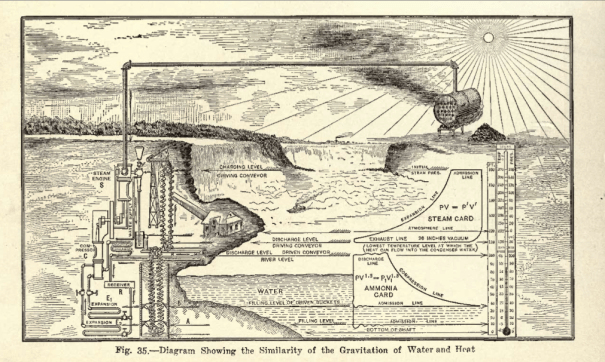
Excerpts from “Elementary Mechanical Refrigeration” by Fred E Matthews, 1912

The following are several pages taken from the above mentioned book.  A similar explanation is more or less copied in “Power’s Principles of Refrigeration” of which I have a 1921 copy.  Take special note of the beautiful illustration below.  Clicking on it should provide a larger version.  I’ve seen outlines comparing mechanical refrigeration to water pumps in the sense that they both require work to lift, pump or otherwise increase a potential, but never to the great painstaking detail as is laid out in the following pages. Read more ›

Tagged with: , , , , , , , ,
Posted in Old Refrigeration Texts, Refrigeration

On the Subject of Compressors

Image

The refrigeration compressor is where all the ‘magic’ happens.  To understand the process of compression is to understand the fundamental principles of mechanical refrigeration.  A compressor is the mechanism that allows us to reuse that same refrigerant over and over.  It is the component in a system which more than any other determines how close to the ideal thermodynamic limits one can obtain, but at the same time is itself unequivocally linked to the conditions throughout the system.  Many refrigeration books start off explaining heat and temperature, then phase change and finally a simple refrigeration example where by a tank of liquid with a low boiling point in atmospheric pressure is allowed to slowly release though a coil to refrigerate a space.  The liquid, (often anhydrous ammonia) vaporizes quickly as it comes in contact with the warm coil wall inside the refrigerated space.  Once the ammonia fully vaporizes it is released to the atmosphere.  This description is usually accompanied with an explanation of how expensive this model is since the ammonia must be replenished.  Of course it is expensive, and that is why we apply pressure. Read more ›

Tagged with: , , , , , , , , ,
Posted in Refrigeration

Recycling Hot Water

Handle for Hot Water

There are a number of different ways to heat domestic water for bathing, washing clothes, dishes and whatever else people need.  Electric Resistive, Natural Gas, Propane, Kerosene, BioMass, Solar, Heat Pumps and even Compost Heaps come to mind.  Obviously, some of these methods make more sense than others.  The fossil fuels are idiotic for reasons I need not go into.  Electric resistive is incredibly wasteful of good quality energy and requires a connection to the utility grid.  The grid is currently powered by coal and natural gas as the majority, and even if the source was more sustainable such as by wind turbine, there are great losses in the transmission of power over long distances and through transformers.  An electrical grid is not a poor idea, but the status quo of the currently implemented technology is.  BioMass can include a lot of things, but the important feature common to them all is they represent ‘present day’ sunshine as opposed to the ancient sunlight store in fossil fuels.  These can be anything from corn husks, bamboo, maple trees, sugar cane, green algae or about anything else that grows on the land or in the oceans.  They can be converted to a standardized fuel source, maybe burned directly in downdraft gasification furnaces similar to these.  Wood gas is good for lots of things; it can even run an internal combustion engine.  Of course a common source of biomass for people in rural regions is firewood and hay bales.  These are often combusted in inefficient boilers, but the technologies are improving rapidly, motivated somewhat by local ordinances against the acrid smoke of poor combustion.  Another use of biomass is in the creation of BioChar.  I won’t go into this too much because I am really excited about the subject and I don’t want to get off topic.  It’s really neat; check it out.  Solar water heating is very sensible and with a small initial investment can provide most if not all of people’s hot water needs in sunny climates.  It’s certainly not a new idea.  Modern forms of solar hot water existed in the 19th century and from what I’ve read were not uncommon in places like Florida and Southern California.  Often, a simple tank painted black supported on a roof or other well exposed area, sometimes built into a 5 sided box with glazing over the south facing portion to trap heat.  Then there are heat pump water heaters; a fascinating subject I wish to further explore. Read more ›

Tagged with: , , , , , , ,
Posted in Hot Water, Refrigeration

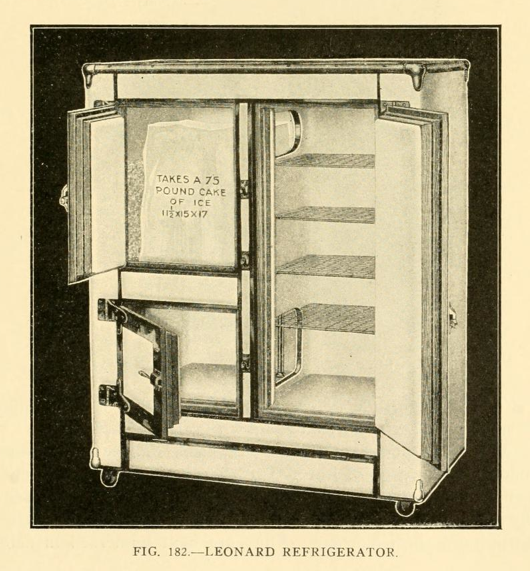
Hand Crafted Refrigerators

Leonard-Refrigerator

I’ve been collecting antique refrigeration books for a little while now and so far, my favorites have been two editions of ‘Household Refrigeration’ by H.B. Hull.  It is a beautifully laid out book covering both thermodynamic engineering principles relating to vapor compression design as well as providing a diverse assortment of the refrigeration technology and the craftsmanship available at that time, the late 1920s.

It was a period of time where American companies both designed and manufactured high technological goods for the domestic market and the world.  Refrigerator companies were diverse and popped up from seemingly nowhere like automobile manufacturers in the late 19th century.  Sure some had been gobbled up by giants, but there was much more variation before the economic depression of the 1930s when I’m sure many of these companies went under or were rolled into monsters like General Electric, as often happens in capitalism’s inevitable downturns and consolidations.  Some of these names are still recognizable: Electrolux, Sunbeam and North Star.  Many of these manufactures in the book are based in New York, New Jersey, Ohio, Indiana, Pennsylvania, Michigan and Washington State.  Some of these manufactures, like the Jewett Refrigerator of Buffalo, NY had been in operation since the mid 19th century. Read more ›

Tagged with: , , , , , , ,
Posted in Old Refrigeration Texts, Refrigeration, Refrigerator

An Outlook On Phase Change Materials

Tip of the Iceberg

Phase Change Materials, usually abbreviated as PCM’s are wonderfully useful for thermal storage applications.  These materials make it possible to store large amounts of heat  relative to a substance’s mass.  They do this in a similar way to the working refrigerant of a vapor compression system in a refrigerator except that unlike refrigerant, these materials usually undergo solid-liquid or liquid-solid transition and are intended to absorb large amounts of heat only to be released later.  Water ice is no doubt the most common PCM and arguably one of the best.  Clean water normally freezes at 0 degrees Celsius.  Water is a great storer of heat as it is, but the energy to melt one kilogram of water ice is 80 times the energy it takes to raise the temperature of one kilogram of liquid water one degree Celsius.  That means if the energy it takes to melt a kilogram of ice into liquid water were applied again, it would raise the temperature to around 80 degrees C!  This transition from solid phase to liquid phase is accompanied by a quantity of energy called it’s ‘enthalpy of fusion’.  Every PCM has an enthalpy of fusion specific to it; some are sharply defined and others are not.  That is, some will give up there heat quickly upon reaching their fusion temperature and others require ‘supercooling’ in order to start fusion. Read more ›

Tagged with: , , , , , ,
Posted in Refrigeration

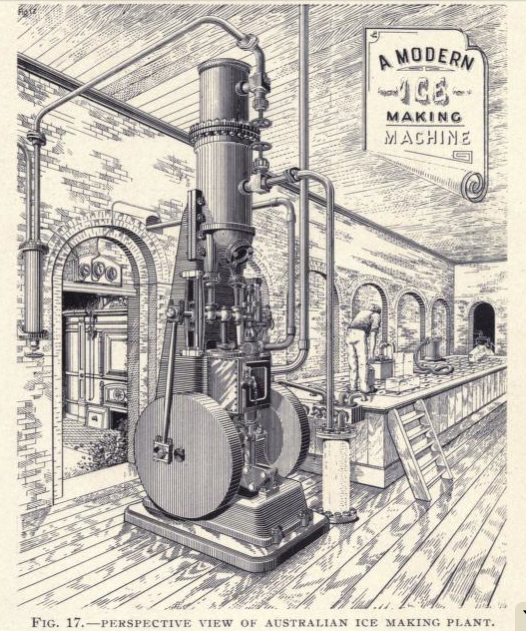
Some Old Refrigerating Machines

Leonard-Refrigerator-Book

I recently purchased these two books from abebooks.com.  They are the second and fourth editions, 1926 and 1933 respectively.  I don’t remember what they cost, but I would have easily payed double.  They are filled with illustrations and descriptions of a variety of domestic ice and mechanical refrigerating machines.  Principles of operation, compressor selection, refrigerant selection as well as common engineering tables and charts fill the pages of these two gems.  I purchased both (and am looking for the rest), in order to see what advancements occur in the course of the few years between their publication.  The fourth edition includes much more information in the way of thermodynamic principles as well as an extensive compendium on air conditioning.  But, altogether both books were fantastic.

There is lot written in both editions on ice box refrigeration, that is, passive cooling by ice block.  This method of refrigeration was still quite common by 1933 even though the cost of mechanical refrigerators were coming down rapidly.  Unfortunately, the quality of these machines came down as well.  No where near the throw away machines of today, but by 1933 you can see an industry move towards hermetic compressors and early forms of the capillary tube refrigerant control which today dominates domestic refrigerating machines. Read more ›

Tagged with: , , , , , , , ,
Posted in Old Refrigeration Texts, Refrigeration

Some Thoughts On Refrigerants

Image

Refrigerants are the blood of a vapor compression system.  They are pumped round and round in an infinite loop of compression and expansion.  The types of materials selected for use in refrigeration are based on a number of factors, the most important of which is the application and temperature range desired.  For this reason, there is no specific refrigerant which is best for all cases.  Some desirable characteristics of a refrigerant are a high heat of vaporization, low specific volume of vapor, chemical stability, low condensing pressures, boiling point at atmospheric pressure well below desired evaporator temperatures and of course, availability and low toxicity.

The last point is not stressed nearly often enough.  Most modern refrigerants are manufactured by Dupont or other chemical companies.  These substances, although effective as refrigerants and when applied appropriately they work very well, are often toxic, destroy the atmosphere, contain substances of which the manufacturing is quite polluting, and finally are expensive and proprietary.  The machines they are designed for are themselves designed for the refrigerant and so are dependent on the chemical company’s product.  This becomes especially concerning with azeotropic refrigerant blends.  These are mixtures of different refrigerants in specific ratios that produce varying properties over the range of operating pressures and temperatures.  Operating in a sealed system, I’m sure they work quite well if suited for the application, the problem comes when a leak occurs in a vapor compression system.  The refrigerant blend will not all leak out in the same ratio it was installed instead, the lightest, most volatile components will leak first changing the makup of the blend and thus changing it’s properties.  If the machine begins to work improperly, little can be done but to recover the remaining mixture and replace it with all new.  Hopefully the recovered mix will be reprocessed and restored to a useful working fluid, but that requires resources that service techs and industry may not always want to spend.  The point is, industry produced refrigerants tend to toxic, nasty substances which lead to a dependency on corporations and should be avoided for their lack of sustainability.

Other refrigerants that were used in the past and have been largely phased out are Methyl Formate, Methyl Chloride and Sulphur Dioxide.  These were mostly dangerous, ozone depleting and/or corrosive to certain system components.

Carbon Dioxide is gaining use in some industries however, it’s high condensing pressures make it unsuitable for small domestic use.  Anhydrous Ammonia was probably one of the first refrigerants and is still very common today.  Large ice producing plants utilized ammonia’s high heat of vaporization and low boiling point to kickstart the refrigeration industry.  Ammonia is still used in large food processing plants, ice skating rinks and a ton of other industries.  It was even used in some early domestic refrigerators however, it’s noxious nature and suffocating nature make it somewhat dangerous to have in small, poorly ventilated areas.  Water is probably the only refrigerant with better heat of vaporization than ammonia.  The problem with water for most refrigeration needs is it’s high boiling point at atmospheric pressure requiring vacuums to be formed, it freezes at or near 0 degrees Celsius and a very high specific volume of vapor making it difficult to handle as a gas.  It is used in some large industry applications utilizing incredibly heavy built turbine compressors.

This brings me to hydrocarbon refrigerants.  These are hydrogen carbon chains which are refined from fossil fuels and usually known as a fuel gas.  The most common are propane, butane.  These have properties similar to industry refrigerants like R-22, R-12 and R-134A.  In some cases, hydrocarbon refrigerants are use to replace the phased out R-12, commonly known as Freon in some antique automobiles.  Hydrocarbon refrigerants have been used for decades going back at least to the 1920’s and probably further.  Somewhat recently, they have seen a surge of use in Australia, Japan and Europe.  As I understand It, Germany has made a successful transition to all hydrocarbon refrigerant domestic refrigerators.  These substances have good thermal properties, they’re non-corrosive, are compatible with all oils, quickly breakdown into non-hazardous byproducts if vented into the atmosphere, are cheap and pretty widely available.  A drawback pointed out in the land of corporate protectionism is their potential flammability.  This is of little concern if handled responsibly.  The amounts of refrigerant required to operate a domestic refrigerator or air conditioner amounts to ounces and the air/fuel ratio and severity of leak to get ignition would be very rare.  Besides, all refrigerants carry oil vapor with them and are flammable in specific concentrations.  The dangers of hydrocarbons are similar to any other refrigerant really.  Asphyxiation, frost bite and dangers associated with pressurized gases are more concerning and these can be avoided with common sense and responsible handling.  I have myself experimented with common BBQ tank grade propane in a heat pump application and found it to be quite promising.  Fuel type propane quality standards are not tightly controlled and so the as a refrigerant, properties can vary quite a bit however, refrigerant grade propane and butane are available.  R-290 and R-600 respectively.  These will be my refrigerant of choice until I find something better.

-M. C. Pletcher

Tagged with: , , , , , ,
Posted in Refrigeration

The KillCap Refrigerator

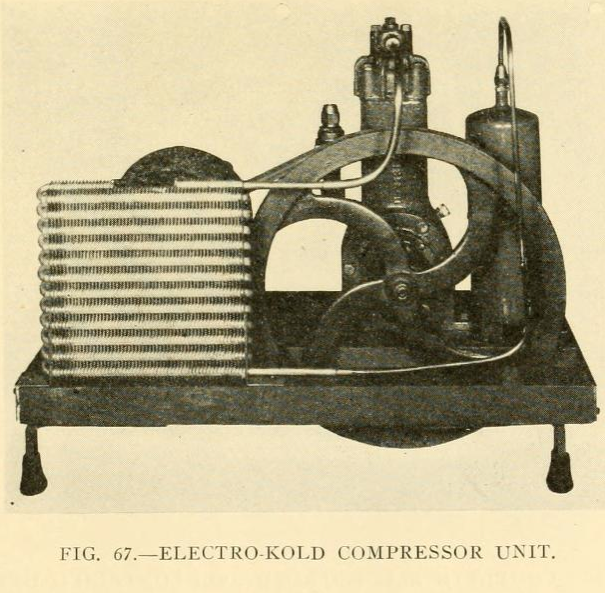
Electrokold-Compressor

As it stands right now, the machine I would most like to develop is a pedal powered refrigerator and possibly freezer.  The compressor and drive mechanism will consist of a metal framework supporting a heavy flywheel perhaps 40 centimeters across and 25 kilograms.  This is mounted in the center of the frame and is driven like the drive wheel on a bicycle by a set of gears and pedals mounted to the framework.  A human operator sits in a seat on top and pedals away.  The flywheel will be able to freewheel and will serve as an energy storage between the operator and the open drive compressor which is chain driven by a set ratio and mounted in the same plane as the flywheel.

In order to provide the refrigeration needs for any 24 hour period, a human operator should not be expected to to pedal for more than an hour; less if possible.  To provide the refrigerating effect, a thermal mass can be employed.  Water ice is an obvious choice because of it’s high enthalpy of fusion and phase change temperature near the desired refrigerator cabinet temperature.  To avoid the well known problems of water ice insulating effect around a direct expansion evaporator coil, I think it’s better to cool a water brine tank with phase change material vessels (water bottles) immersed in it.  The evaporator could passively cool the water brine/PCM or if active brine circulation is advantageous then mechanical energy from the operator could be used.  An efficient use of that energy might be a standing wave held in the tank with some sort of mechanical governor to guide it.

It should be noted that my initial interest is to evaluate how much ice a human being can produce in a reasonable amount of time.  I have not given great thought recently to the design of a refrigerator cabinet itself and how the phase change material should be utilized.  Some cabinet materials being considered are: stainless steel, copper, plastic, glass, wood and cork insulation.  Cork was at one time used extensively for refrigeration before being replaced by petroleum alternatives.  Areas I would like to explore are door(s) improvements, windows, multiple compartments, cooling by radiation rather than convection and what I call right now ‘wet cold’.  If convective cooling were used then perhaps water ice could cool the air directly and so avoid the drying out effects that plague modern refrigerators.  No doubt some old texts on ice box construction could be of use in this matter.  Another way to remove heat from the cabinet to melt the PCM, would be the use of heat pipes with thermostatically controlled valves to regulate temperature.  A complication I wish to avoid. Read more ›

Tagged with: , , ,
Posted in Refrigeration, Refrigerator

A Better Refrigerator

Image

If you ask most people, “What are the most important things we are going to need in a peak oil world?”.  I can guarantee that a better refrigerator won’t make it into their top 20.  It probably won’t even come up.  Residential refrigeration is taken for granted as is electrification, hot water, running water for that matter, a reliable food source, sanitation services and list list goes on and on and on.  There are so many technologies that we give little thought to, having only acquired them in the last three or four generations.  Cheap, abundant energy provided these for the masses of people.  ‘Masses’ meaning of course the minority of the world’s population self chosen to have such luxuries.

There seems to be someone working on improving, adapting ad securing many of the technologies that have freed humans of labor, tedious work, malnutrition, disease and so on.  Wether it’s a University program designing solar water heaters or individuals toiling away building ‘eco friendly’ mud huts that are safe, warm and energy efficient; it’s nice to know that people are waking up to the fact that the low hanging fruit of fossil fuel energy is all but picked and that our society gorged itself on that energy with inefficient gizmos of modern living, throw away products in a consumption driven economy and became dependent on an unsustainable infrastructure that will quickly deteriorate beyond any control as soon as maintenance falls behind.  Yes, we could have used that ancient sunlight locked away in those carbon deposits to propel our society forward both socially and technologically, but we didn’t.  The industrial revolution will be remembered as a flash in the pan following a long arduous journey.

What the hell does all this have to do with a refrigerator?  It’s the one piece of technology we give little thought to and yet it’s one of the most important achievements of human civilization.  It changed the way we live on this planet.  I won’t say much more about it than that.

I would like a record somewhere to establish the following.  When it comes to refrigeration, we are woefully unprepared for a peak oil society.  Of all the work being done about developing appropriate technologies; ones that use sustainable sourced, non toxic materials and provide efficient service for many years, I have yet to see one advancement in personal refrigerators.  This may seem like a rather specific criticism, but it’s my criticism and feel it’s rather important.  Capitalism has been and continues to be the problem for much, if not all of our problems.  Producing well made, long lasting goods is not sustainable in a capitalist economy so that model gets booted out the door.  There is too much at stake and we can’t afford it anymore.

I propose something better.

To be continued…

-M. C. Pletcher
Tagged with: , , ,
Posted in Refrigeration, Refrigerator

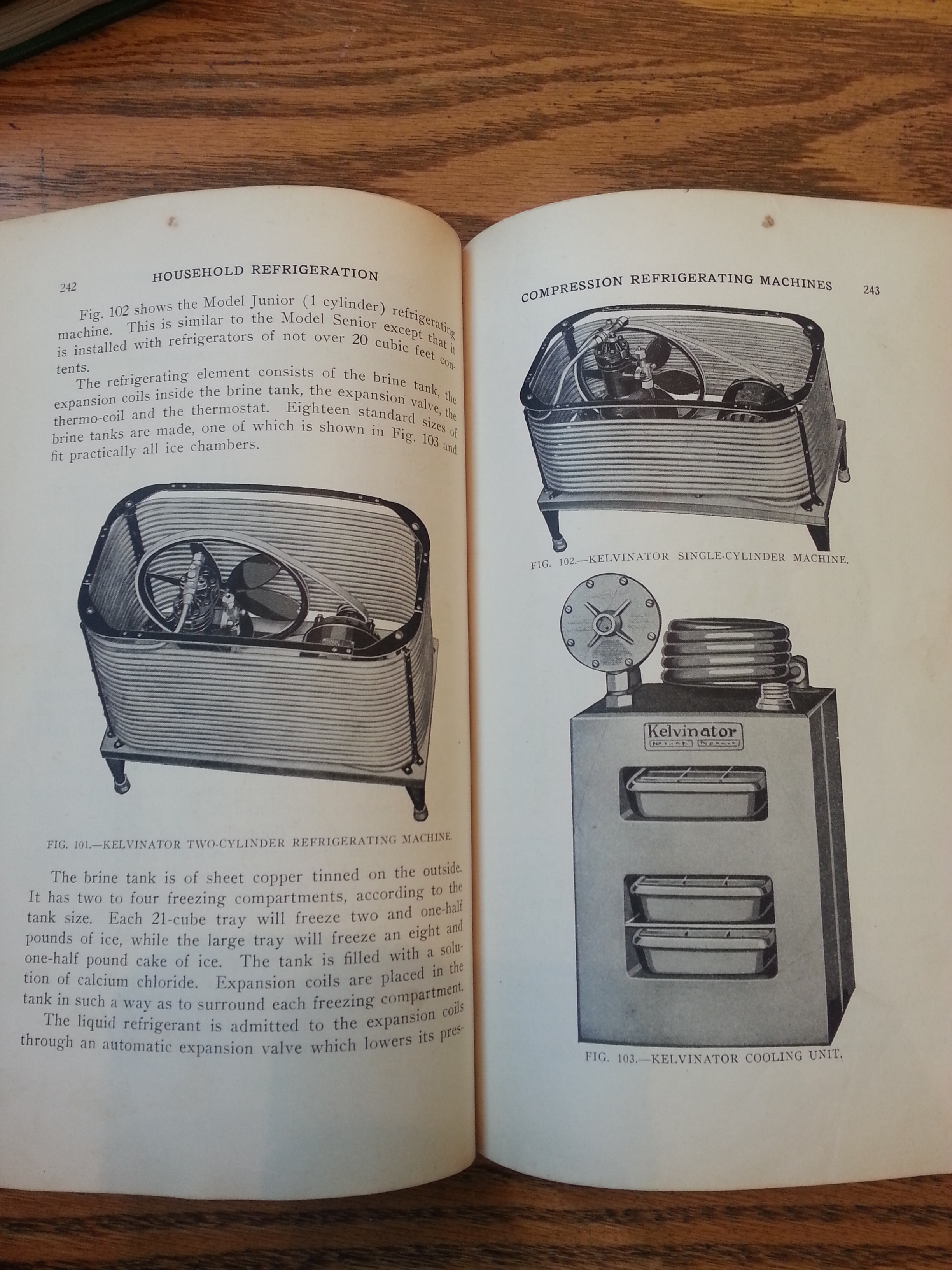
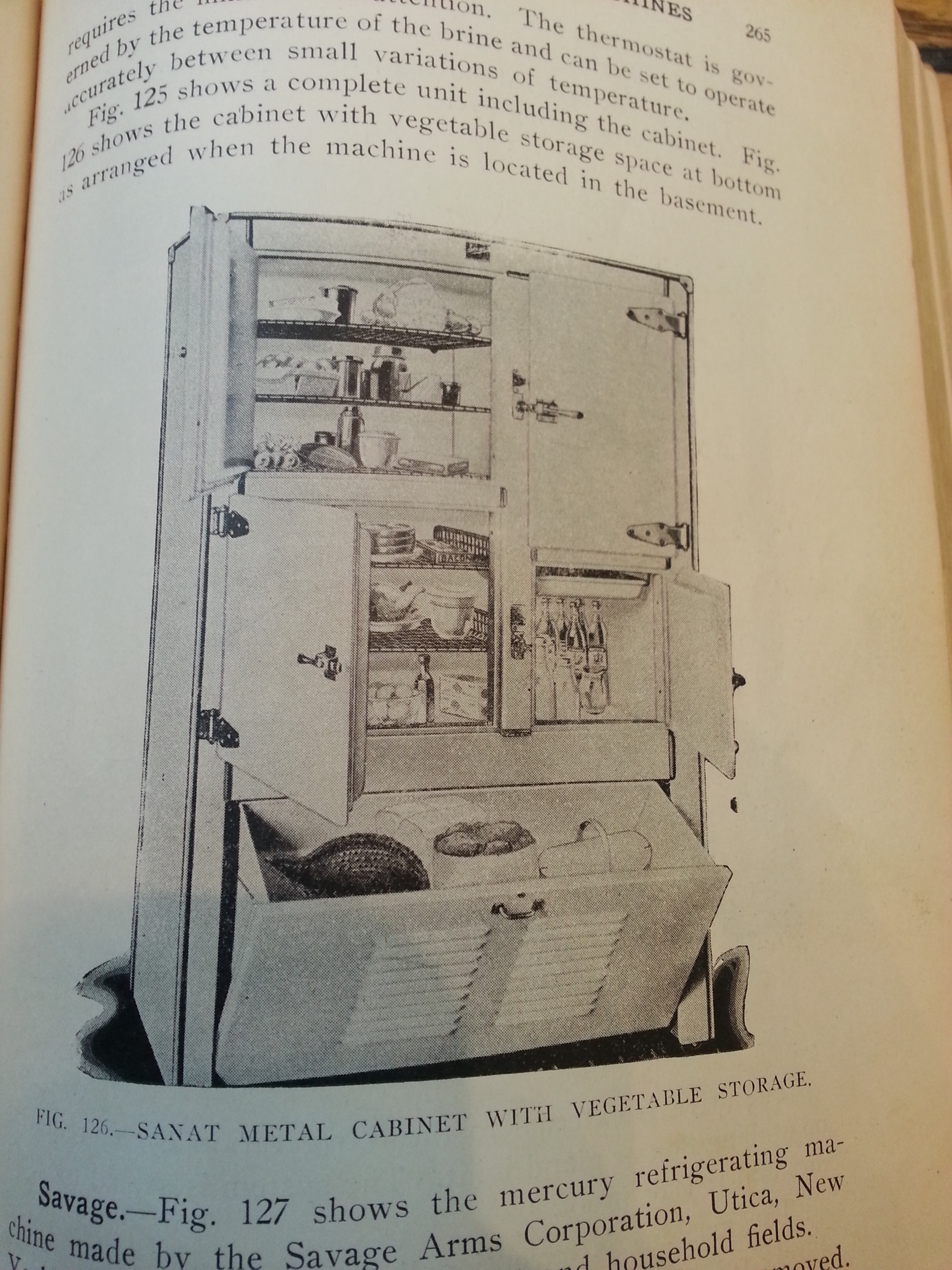
Household Refrigeration 1927

20130126_115927 20130126_11592220130126_120058 20130126_120125 20130126_120205 20130126_120216 20130126_120228 20130126_115855 20130126_115843 20130126_113941

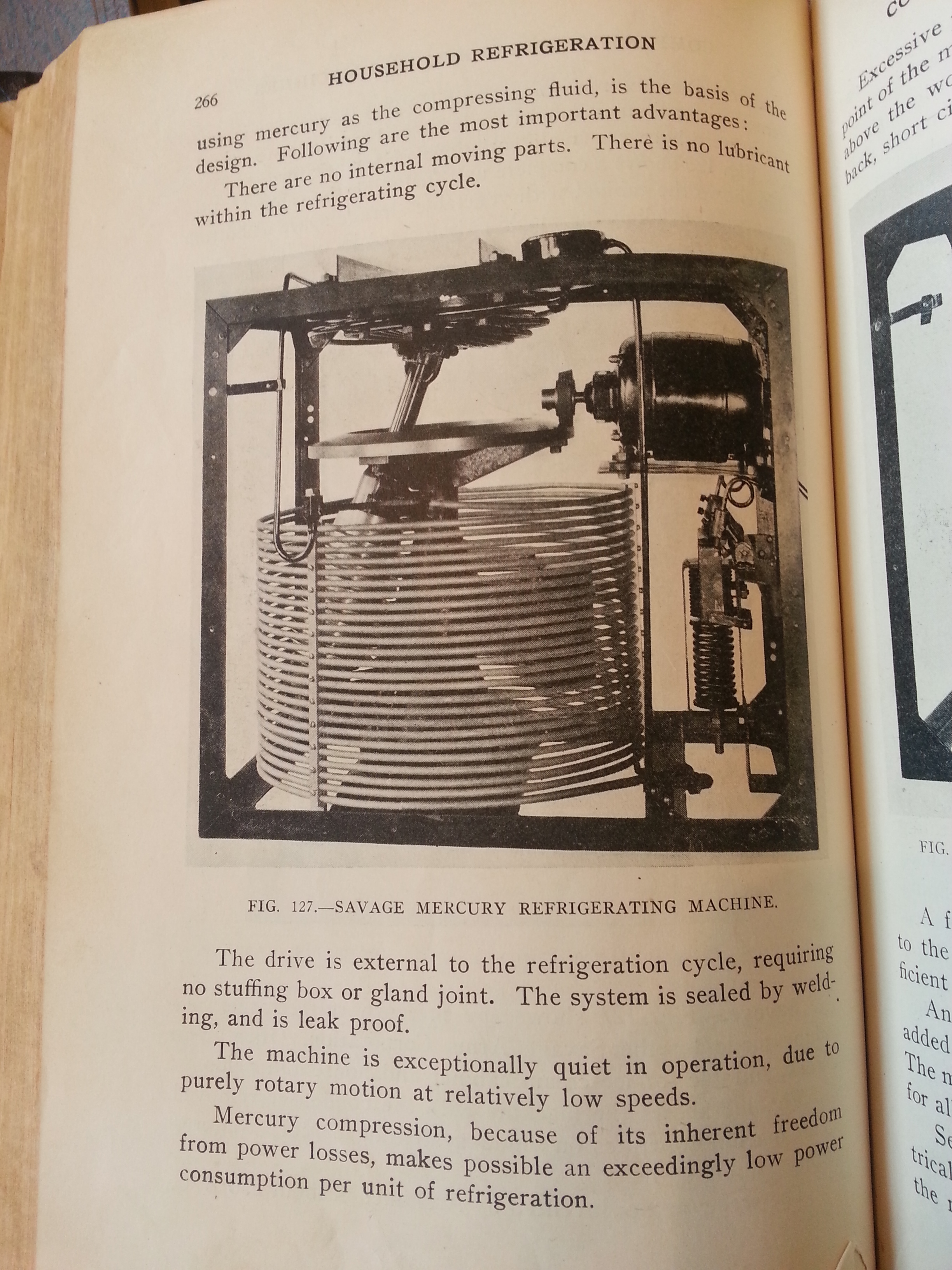
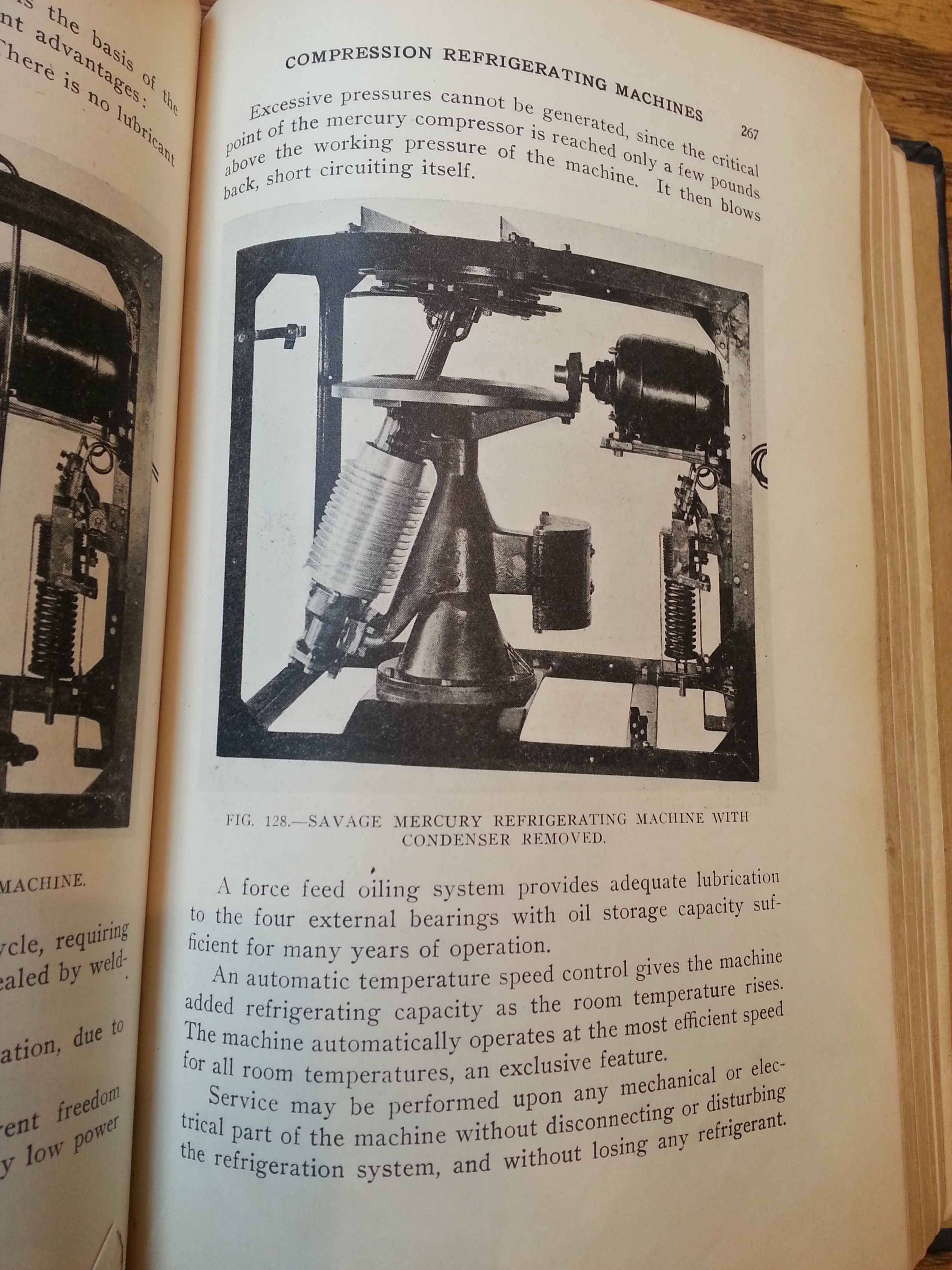
Notice the individual cabinet like doors on the refrigerator and the swinging drawer at bottom. Most units were belt driven external drive in this book. There was extensive use of flooded evaporators with low side floats at this time. I bought two editions of this book. I hope to get them scanned into pdf and share.  Also of note, a late 20’s book on Ice Manufacture and the use of Cork Insulation.  3 Pictures describe and show the Savage mercury compressor; an oddity I’ve seen little of before.

-M. C. Pletcher

Tagged with: , , ,
Posted in Old Refrigeration Texts, Refrigeration, Refrigerator

I Caught the Refrigerator Bug

I caught the refrigerator bug again.  It happens every few months, I get a job, I quit a job, I change  my musical taste, I read a few books; but then, it comes back with a fury.  That damned refrigerator again.  I’ve got it in my mind to build a better refrigerator.  It takes my mind hostage so that I think of little else.  Scribbled bits of paper are piled in the corner with dates going back some years.  I remember ideas I’ve had, rediscover others in fits of Eureka and toy with still others yet to be solved.

There is something about refrigeration that fascinates me in a way nothing else ever has.  A machine capable of using energy in order to move energy, to pump heat, seems to me to be a machine worth understanding and optimizing.  But that’s me.

What happened to the refrigerator?  There it sits in the kitchen humming away or the garage quietly bubbling and chugging along to keep the beer cold, the lettuce fresh and the ice cream frozen.  But, how many people know how the hell that thing works; that staple of modern living?  How many many people could adequately explain the basic functioning of a heat pump the importance of material phase change?  I’d say not many, but I’m not complaining about education here; this is about the sorry state the modern refrigerator is in.  Competition between capitalist refrigerator manufacturers have mass produced an energy hogging, difficult to recycle, adulterated and toxic beast.  The same has happened to almost every other technology or service the capitalism’s destructive ‘invisible hand’ touched.  If one company manufactures a quality product and another an almost identical unit yet with only slightly cheaper components; it’s not difficult to predict the outcome after several years of this process.

A short list of design issues with the modern household refrigerator:

Full of toxic plastic, insufficient insulation, energy wasting door construction, poor compressor and condenser placement, almost no thermal mass, highly toxic and expensive refrigerant gas, uneconomic to service generally.  Basically, they’re cheap boxes of toxins designed to be discarded and replaced!

There were at one time a beautiful diversity of household refrigerator designs and technologies.  This ‘cryodiversity’ I’ll call it, made for some incredibly interesting household heat pumps with a great deal of consideration put into using quality materials and ensuring these machines were serviceable.  Today though, pick out 100 different refrigerator manufacturers (if there are that many), or 100 different refrigerator models and describe the most notable differences.  Few are worthy of note.  Water dispensers and side by side doors do not count.  The components of these systems and the research and development that produced them have long since been paid for many times over.  These components have finite life spans.  This economic system cannot produce quality, long lasting products with consideration for energy use, reusability/recyclability, serviceability or appropriateness for there environment.

For these reasons and others, I feel that the state of refrigeration technology and the inaccessibility the common person has to understanding, repairing, improving or building appropriate heat pumping machines will leave those living in a fossil fuel dependent society yet more vulnerable in a peak oil world.  This is why I seek to build a better refrigerator.  One that serves it’s purpose well and is sourced, built and powered independent of unsustainable practices that jeopardize the future of life on Earth.

-M. C. Pletcher

Tagged with: , , ,
Posted in Refrigeration, Refrigerator

Notification of Intent

This blog represents my intentions to catalog and possibly share personal musings on the subject of entropy.  Of primary interest to me is the study of the universe and the distribution of matter and energy throughout, with special regard to unusual ‘lumpiness’ and other low entropy conditions that occur.  For a considerable time to come, this will focus on heat pumps with special consideration for vapor compression systems.  I recently began keeping a personal journal and have found great use in expressing my ideas long hand.  Though I will continue relying  on personal expression in analog forms, I hope this blog will represent a cleaner, more refined layout of my personal thoughts, ramblings and progress in whatever ventures I engage in.

-M. C. Pletcher

Tagged with: , ,
Posted in Uncategorized

Enter your email address to follow this blog and receive notifications of new posts by email.

Join 308 other subscribers